

What is RTP in Crypto Casinos? Complete 2026 Guide
Why crypto originals average 99% RTP while traditional online slots sit closer to 96%.

The Quick Answer: RTP (Return to Player) is the percentage of all wagered money a game pays back to players over time. In crypto casinos, RTP typically ranges from 97% to 99%. Traditional online casinos sit at 92% to 96%.
For example, if a game has 98% RTP, it returns $98 for every $100 wagered over millions of rounds. The remaining $2 is the casino’s profit margin.
RTP is the single most important number for any crypto gambler. It tells you exactly how much value you’re getting from every bet. Traditional online slots rarely break past 94% RTP. Crypto native games like Dice, Crash, and Plinko consistently deliver 99%.
Verified high RTP games and transparent payout data are weighted heavily in our casino rating methodology. RTP is the first number we check.

RTP vs. House Edge: Two Sides of the Same Coin
Think of a game’s math as a 100% pie. RTP is the slice given to players, and the House Edge is the slice kept by the casino. If one grows, the other must shrink.
The Mirror Formula
RTP = 100% − House Edge
1% house edge = 99% RTP. 3% house edge = 97% RTP. 5% house edge = 95% RTP.
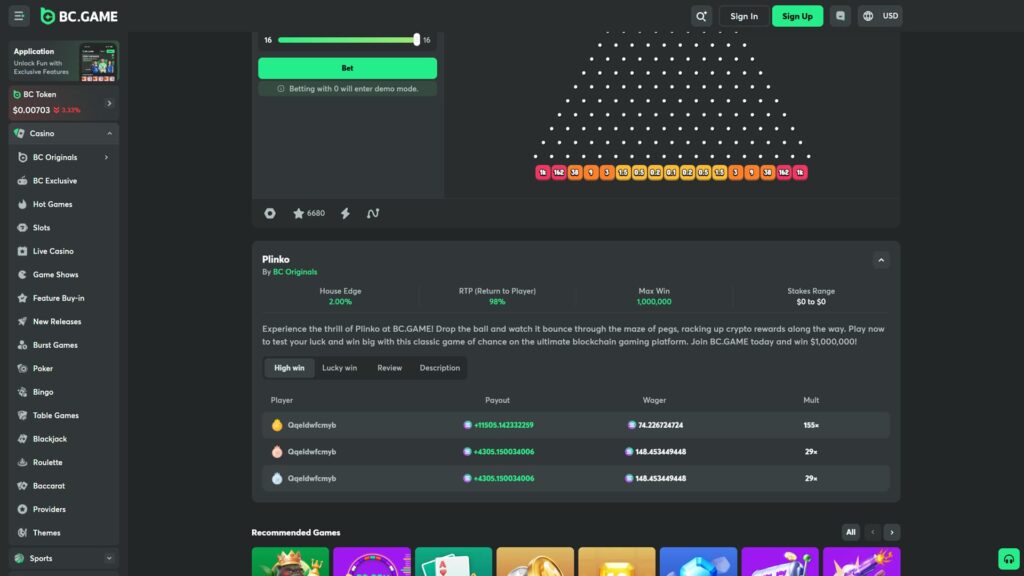
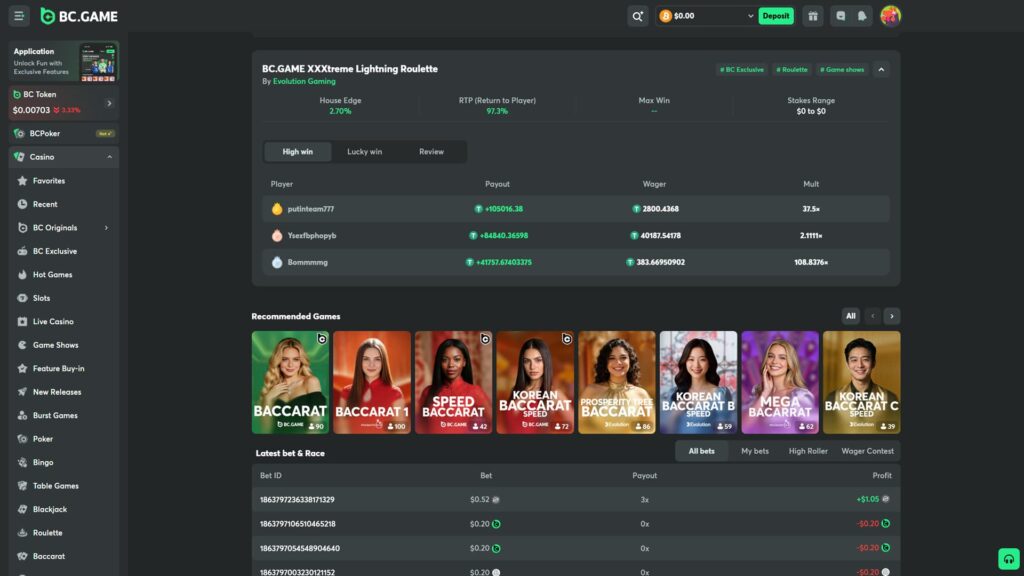
In crypto casinos, both numbers are published in the game info panel. You can check them before placing a single bet. How casinos stay profitable even at 99% RTP is covered in our house edge guide.
Most crypto casinos display RTP inside the game itself. Look for an “i” icon, a menu button, or a “game rules” link on the game screen. It shows the exact RTP percentage, the provider name, and sometimes the volatility rating. If a game doesn’t display a specific RTP number, skip it.
Why Crypto Casinos Offer Higher RTP
Traditional online casinos are expensive to run. Crypto casinos cut most of those costs, and the savings show up as higher RTP.
One thing to watch: some slot providers let casinos choose between multiple RTP settings for the same game. A title might run at 94% on one site and 98% on another. Crypto originals don’t have this problem because the house edge is hardcoded and verifiable through provably fair hashing.
RTP Comparison: Crypto vs. Traditional
| Game Type | Crypto Casino RTP | Traditional RTP | Your Advantage |
|---|---|---|---|
| Dice / Limbo | 99% | N/A | Crypto Only |
| Crash / Plinko | 99% | N/A | Crypto Only |
| Video Slots | 96% to 98% | 92% to 95% | +2% to 4% |
| Blackjack | 99.5% | 99% to 99.5% | Similar |
| Roulette | 97.3% | 97.3% | Similar |
RTP values are typical ranges. Always verify specific game RTP in the casino’s game info panel.
The crypto standard in 2026 is 97% RTP or higher. Playing anything below 96% means you’re paying a legacy tax for outdated infrastructure.
The “Millions of Spins” Theory
A common mistake is thinking that a 99% RTP means you will get back $99 for every $100 you spend in a single session. RTP is a theoretical average calculated over millions of game rounds, not a guarantee for any single bet.
Every round is an independent event governed by the Random Number Generator (RNG). The game doesn’t know or care if you just won big or lost ten rounds in a row.
Casinos always win in the long run, even with 99% RTP games. And RTP only tells half the story. A 99% game can still drain your bankroll in minutes if variance goes against you.
RTP vs. Volatility: Why 99% Feels Different
Two games can both have a 99% RTP but feel completely different to play. The difference is Volatility (also called Variance). RTP tells you how much comes back over time. Volatility tells you how wild the ride will be getting there.
Low volatility means small, frequent wins. Your balance stays stable for a long time. Plinko on Low Risk is the textbook example: most drops return 0.8x to 1.2x. Ideal for clearing wagering requirements without big swings.
High volatility means long losing streaks broken by massive payouts. Crash at 100x is the opposite end: you might bust 20 rounds in a row, then hit a multiplier that covers all of it and more. Your balance swings violently, and there’s real risk of going broke in minutes.
Real Example: BC.Game Plinko
Low Risk (8 rows): Win rates of 40% to 60% per drop. Your balance barely moves.
High Risk (16 rows): Win rates of 5% to 15% per drop, but edge slots pay 1,000x.
Same RTP. Wildly different experience. Both numbers matter when choosing your settings.
Always check volatility alongside RTP before choosing your settings. Casinos with provably fair games publish both numbers in the game interface. Match volatility to your goals: clearing a bonus means low volatility, chasing a jackpot with money you can afford to lose means high.
Frequently Asked Questions
On Provably Fair games, the RTP is locked into the code and verified via cryptographic hashes before you bet. The casino cannot alter it mid game.
Some third party slot providers offer “variable RTP ranges” (like 94%, 96%, or 98% versions of the same slot). Always check the game’s info panel to verify the current percentage before playing.
Yes, with limits. Platforms like Gamdom and Duel now offer permanent 100% RTP games (0% house edge) with cryptographic verification. The catch is daily wagering caps, typically around $50,000 total.
Once you hit the cap, the edge increases to 0.1% to 1% until the next reset. These games are real but designed for medium volume players, not high rollers.
Not necessarily. It means you have a better mathematical chance over time. A 99% RTP game is much fairer than a 90% RTP game, but you still need luck to win in the short term.
Think of RTP as your expected value over thousands of bets, not a guarantee for your next session.
No. RTP is a property of the game rules, not the currency. Whether you bet with Bitcoin, Ethereum, Solana, or USDT, the odds remain identical. The currency only affects transaction speed and fees, not the game’s payout percentage.
In 2026, anything above 97% is competitive, and 98% to 99% is excellent. Crypto originals like Dice and Crash typically hit 99% RTP.
Traditional slots hover around 94% to 96%. If you see a game below 95% RTP, you’re paying a premium for outdated technology or flashy graphics. Specific picks are ranked in our highest RTP games list.
Find the Best RTP Games
If you’re playing at a casino with sub 96% RTP on most games, you’re leaving money on the table. Find casinos with verified payout rates and transparent game data in our ranked list.
Tomas Lindgren is the Education and Responsible Gambling Editor at KryptoCasinos. With a journalism degree from Stockholm University and a postgraduate certificate in Digital Media from the University of Malta, Tomas spent three years covering cryptocurrency adoption across the Nordics before relocating to Malta in 2018. He specializes in breaking down complex crypto gambling concepts into step by step guides that anyone can follow. Based in Malta.