

How We Rate Crypto Casinos: 50 Checkpoints Across 8 Scored Categories
Most casino review sites don't deposit any money. We deposit real crypto, track every withdrawal on the blockchain, and publish the exact formula behind every score.

Short Version: We deposit real crypto, play for 30+ hours, withdraw real money, and verify every transaction on the blockchain. Each casino is scored across 50 checkpoints in eight weighted categories. Every weight, checkpoint, and scoring threshold is published on this page.
Why We Built a Crypto Specific Rating System
Most casino review sites judge crypto casinos using the same framework they built for regulated UK and EU operators. That framework was designed for platforms that are regulated by the government, use fiat banking rails, and require identity verification. It doesn’t consider the important aspects of how money is moved on a blockchain.
Crypto casinos are different. For things like verifying withdrawals on the chain, provably fair game mechanics, making sure wallets are compatible, not requiring KYC access, and the difference between a Curaçao license and an Anjouan license, we need a system that’s designed for the job.
If you are still deciding where to play, our guide to choosing your first crypto casino will help you understand the basics before you need the scoring details below.
Every score on this site is produced by the system explained below. There are no exceptions.
Three Types of Crypto Casinos We Review
Crypto casinos are not all the same. We classify each one before testing begins, and the category determines which checkpoints carry the most weight. Every review on our casino review page includes the casino type at the top.
Crypto Native
It’s made specifically for cryptocurrency and usually doesn’t have a fiat option or KYC. Provably fair originals are the core product. Rainbet and Gamdom are examples of the casinos we have reviewed.
Crypto native casinos face the highest expectations for on chain transparency, provably fair verification, and wallet infrastructure. If a casino built entirely around crypto cannot verify its own game outcomes, it fails the core value proposition.
Crypto-First
Built primarily for cryptocurrency users with optional fiat support and threshold based KYC (verification triggered at certain withdrawal amounts, not on signup). A mix of provably fair originals and traditional provider games. BC.Game and CoinCasino are examples.
We expect strong crypto infrastructure, at least partial provably fair support, and clear communication of KYC thresholds.
Crypto Friendly
A traditional online casino that also accepts cryptocurrency, typically with full KYC verification and no provably fair originals. Stronger licenses from regulators like MGA or Kahnawake are common. 22Bet is the clearest example in our reviews.
We consider licensing strength, provider quality, and regulatory compliance when we evaluate these factors. The type of casino doesn’t matter; poor crypto infrastructure still costs points.
| Crypto Native | Crypto First | Crypto Friendly | |
|---|---|---|---|
| Fiat Option | No | Optional | Yes, primary |
| KYC Required | Rarely | Threshold based | Usually mandatory |
| Provably Fair | Core offering | Partial | Rare |
| Typical License | Curacao, Anjouan | Curacao, Kahnawake | MGA, UKGC, Curacao |
| Scoring Emphasis | On chain transparency, wallet support | Crypto infra + traditional trust signals | Licensing strength, provider quality |
The Scoring System: 50 Checkpoints, 8 Categories, 1 Weighted Score
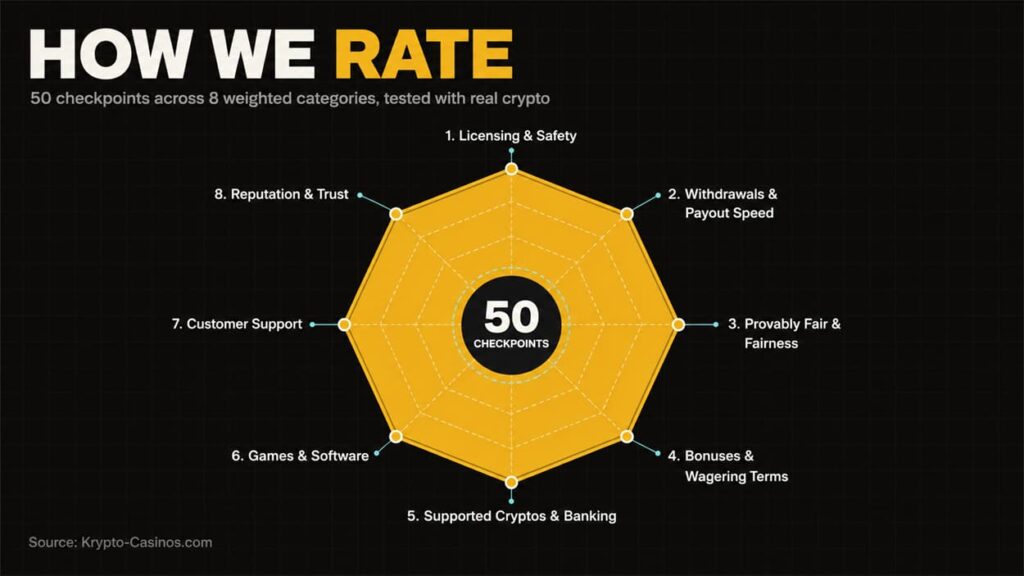
We evaluate each casino based on 50 different factors, which are divided into eight categories. Each category has a score from 1 to 10.
The final rating is a weighted average, where the categories that matter most to your safety and experience have more weight.
| Category | Weight |
|---|---|
| Security and Licensing | 20% |
| Crypto Infrastructure | 20% |
| Provably Fair and Game Integrity | 15% |
| Withdrawal Speed and Reliability | 15% |
| Bonuses and Fairness | 10% |
| User Experience | 10% |
| Customer Support | 5% |
| Responsible Gambling | 5% |
Security and crypto infrastructure each account for 20% of the final score. These two categories alone control 40% of the outcome because they determine whether your money is safe.
Support and responsible gambling are each 5% because they matter, but they don’t define the main experience.
Below is a list of the things we check in each category. It also explains what makes a high score different from a low one.
Category 1: Security and Licensing (20% Weight, 8 Checkpoints)
The license a crypto casino holds is more important for your protection as a player than almost anything else on the site. Casinos that are licensed by the Malta Gaming Authority (MGA) are legally required to keep player funds separate, undergo regular audits, and follow a formal process for resolving complaints. A casino that has a license from Anjouan has a piece of paper, but there’s virtually no enforcement behind it.
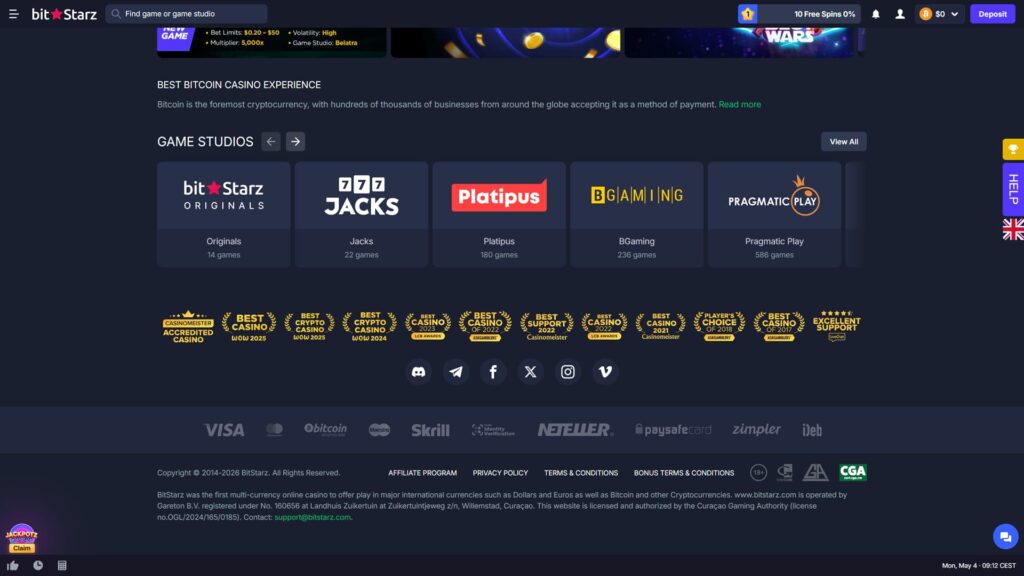
We have seen casinos change jurisdictions overnight, moving from Curacao to Anjouan, and players have had very little recourse when this happens. We look at more than just licensing. We also check the security system that protects your account and money.
A casino holding millions in player crypto without cold storage is a significant security gap. We also verify whether the operating company is publicly identified, because anonymous operators cannot be held accountable if funds disappear.
#1 License type and jurisdiction
#2 SSL encryption across the entire site
#3 Two factor authentication for player accounts
#4 Cold wallet storage for crypto reserves
#5 Fund segregation (player funds vs operating capital)
#6 Documented security breaches or data leaks
#7 Published corporate ownership and identifiable team
#8 License status history (revocations or downgrades)
We rank license jurisdictions using our own tier system based on actual player protection, not just whether a license exists on paper.
| Tier | Jurisdictions | What It Means |
|---|---|---|
| Tier 1 | MGA, UKGC, Isle of Man | Segregated funds, formal complaints, regular audits |
| Tier 2 | Curacao (CGCB), Kahnawake | Best available for most crypto casinos, basic oversight |
| Tier 3 | Anjouan, Costa Rica, Panama | License exists, minimal enforcement |
| Tier 4 | No license, anonymous operator | Zero regulatory protection |
Category 2: Crypto Infrastructure (20% Weight, 9 Checkpoints)
Accepting Bitcoin is not the same as being a good crypto casino. One platform supports 120 coins across multiple networks. It has no withdrawal fees and Lightning Network deposits.
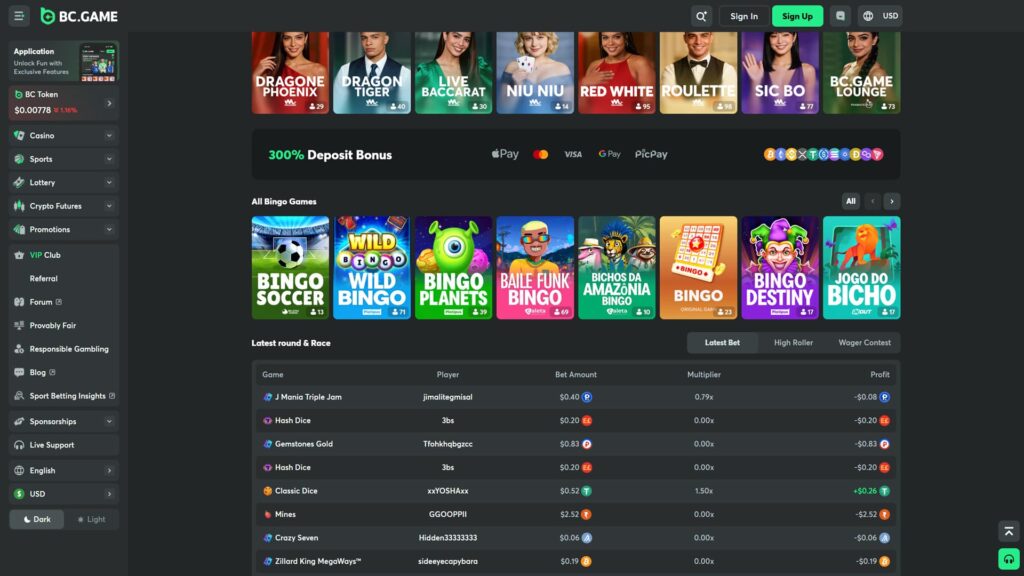
Another platform takes BTC and ETH through a third-party payment processor. The minimum withdrawal is $50.
Network selection is one of the most overlooked factors in crypto gambling. Withdrawing USDT on TRC 20 costs less than $1 in network fees. The same withdrawal on ERC 20 can cost $5 to $15, depending on gas prices.
If a casino only supports ERC 20 for Tether, it costs you money every time you cash out. Most players never realize this because the casino does not charge a visible fee.
Our crypto wallet guide covers network selection and how to avoid paying unnecessary fees.
#9 Total number of supported cryptocurrencies
#10 Network options per coin (ERC 20, TRC 20, BEP 20, SOL)
#11 Lightning Network support for BTC
#12 Native wallets vs third party payment processor
#13 Casino withdrawal fees (above or below network cost)
#14 Minimum withdrawal threshold
#15 Stablecoin availability (USDT, USDC, DAI)
#16 Web3 wallet integration (MetaMask, WalletConnect)
#17 Deposit speed (time to playable balance)
Category 3: Provably Fair and Game Integrity (15% Weight, 7 Checkpoints)
This is the category where crypto casinos prove they are fundamentally different from traditional platforms. The casino commits to every outcome before your bet using a hashed server seed. After the round, you can verify that the outcome matches the hash.
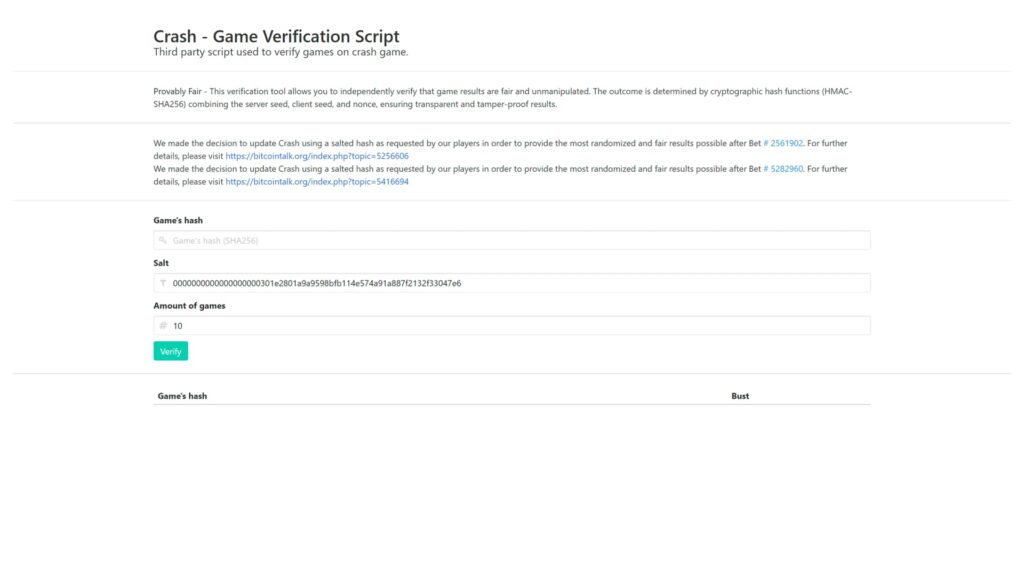
Traditional online casinos use random number generators (RNGs) certified by labs like GLI or eCOGRA. That model works, but you have to trust the auditor. Provably fair gets rid of the need for trust completely because you can check any bet yourself using the server seed, client seed, and nonce.
The difference is important because it changes what “fair” actually means. In the RNG model, fairness is a promise that is confirmed by a certificate. In the provably fair model, fairness is a mathematical fact that can be checked.
Our guide on provably fair vs traditional RNG explains where each model is strong and where it falls short.
We also check if RTP figures are published for each game. Casinos that hide their Return to Player percentages are asking you to gamble without knowing the odds.
#18 Provably fair system available for original games
#19 Independent seed verification (server seed, client seed, nonce)
#20 Hash algorithm documented (SHA 256, HMAC SHA512)
#21 Game providers licensed (Pragmatic Play, Evolution, etc.)
#22 RTP published per game
#23 Third party certification (GLI, eCOGRA, iTech Labs)
#24 Smart contract audited (CertiK, Hacken)
Category 4: Withdrawal Speed and Reliability (15% Weight, 6 Checkpoints)
The number doesn’t come from the casino. We measure the actual withdrawal time from the moment we click “withdraw” to the moment funds arrive in our external wallet. Every withdrawal is checked on the blockchain explorer with a transaction code and timestamp.
We test with at least three withdrawals per casino, using at least two different cryptocurrencies, at amounts of $20, $200, and $500 or more. The multi amount test matters because some casinos process small withdrawals instantly but trigger a manual review for higher amounts without telling you about that threshold.
Receiving a surprise KYC request after depositing is very different from knowing the rules before you start. Our deposit and withdrawal guide covers network selection, fee optimization, and common transfer mistakes.
#25 Actual withdrawal time (request to funds in wallet)
#26 Tested with at least 2 different cryptocurrencies
#27 Tested at $20, $200, and $500+ amounts
#28 Transaction hash verified on blockchain explorer
#29 KYC trigger thresholds disclosed in advance
#30 Consistency across all test withdrawals
Category 5: Bonuses and Fairness (10% Weight, 7 Checkpoints)
At first, a $1,000 welcome bonus seems great, but there are conditions to consider. If you have to wager 60 times with a maximum payout of $100, the actual value is much lower than a $200 bonus with 25 times wagering and no maximum limit.
We calculate the Expected Real Value (ERV) by considering wagering requirements, game contributions, bet limits, cash-out limits, and time limits. Most review sites compare headline bonus numbers. We compare what you actually keep.
The specific bonus terms for crypto add complexity. Some casinos denominate bonuses in BTC, which means the value fluctuates with the market, and whether the bonus is sticky or cashable changes the math completely.
We also check the full Terms and Conditions for hidden clauses that alter the real value of the offer.
#31 Wagering requirement multiplier
#32 Game contribution rates toward wagering
#33 Maximum bet size while bonus is active
#34 Maximum cashout cap on bonus winnings
#35 Time limit to clear wagering requirements
#36 Bonus denominated in crypto or fiat
#37 Hidden terms buried in T&Cs
ERV Example: Why the Smaller Bonus Wins
Casino A: $500 bonus, 40x wagering, $100 max cashout, 99% RTP. Total wagering: $500 x 40 = $20,000. Expected loss: $20,000 x 1% = $200, leaving $300 net, but the $100 cap means ERV = $100.
Casino B: $200 bonus, 25x wagering, no cap, 99% RTP. Total wagering: $200 x 25 = $5,000. Expected loss: $5,000 x 1% = $50, leaving $150 net with no cap, so ERV = $150.
Casino B’s smaller headline bonus is worth 50% more in real value.
The house edge determines how much you lose grinding through wagering requirements, which is why ERV depends on which games you play.
Our bonus value calculator guide walks through every variable step by step.
Category 6: User Experience (10% Weight, 5 Checkpoints)
We test every casino on a mid-range Android phone using a 4G connection. We don’t use a high-end laptop with fiber internet. Most people gamble with crypto on their phones, so the experience should reflect that.
If the signup process takes more than two minutes, the lobby lags when scrolling through games, or features that exist on desktop are missing on mobile, it costs points. Integrating Web3 wallets is becoming an important feature for users of cryptocurrency.
#38 Account creation speed (first click to first bet)
#39 Mobile load time and functionality on 4G
#40 Lobby search and game filtering
#41 Web3 wallet login (MetaMask, WalletConnect, Telegram)
#42 Visual design, readability, and popup behavior
Category 7: Customer Support (5% Weight, 4 Checkpoints)
Support is only important when something goes wrong, but when it does, it’s the most important thing on the site. We submit at least eight support interactions for each casino, including one technical question about transaction confirmations to test whether agents understand crypto.
The key difference between a good and bad support team is whether the agent can explain what a TXID is. If you tell customer service that your deposit has 12 confirmations on the blockchain but is not showing in your account, and the agent responds with a generic template, that is a failure.
#43 Live chat availability (24/7 or limited hours)
#44 Response time to first human reply
#45 Crypto literacy (can agents explain a TXID?)
#46 Answer quality (specific vs copy paste template)
Category 8: Responsible Gambling (5% Weight, 4 Checkpoints)
Crypto transactions cannot be reversed, and no KYC casinos remove any obstacles between you and the action. This makes responsible gambling tools more important in crypto casinos than in any other type of online gambling.
We check if the casino gives players ways to protect themselves, like setting deposit limits, loss limits, and wager caps. We also check if they offer self-exclusion and session time reminders. Casinos that offer stablecoin options do better here because a player who deposits USDT is not exposed to the volatility risk that comes with depositing BTC during a price change.
#47 Deposit, loss, and wager limits (daily, weekly, monthly)
#48 Self exclusion and cool off options
#49 Session time reminders
#50 Links to external support (GamCare, Gambling Therapy)
Our 6 Step Testing Process: From First Deposit to Published Review
Every casino review follows the same six steps in the same order, with no optional steps. We do not publish based on screenshots, press releases, or demo accounts. Every score is produced by depositing real money, playing real games, and withdrawing real crypto to an external wallet we control.
The whole process takes at least five days for each casino. Here’s exactly what we do:
Step 1: Background Research and Classification
Before we deposit any Bitcoin, we do our own research to make sure the casino is reputable. We check the license directly with the regulator’s public database, not just by looking at the footer logo. We find out which company is running the game, check its history with the state, and look for any complaints that have been made about it on online forums.
We then put the casino into one of three groups: Crypto Native, Crypto First, or Crypto Friendly. The classification is how we decide how important each of the 50 checkpoints is when we’re doing the scoring.
It’s not always clear what makes a casino a crypto casino. This is especially true for hybrid platforms that say they are crypto forward but use fiat processors (the systems that process regular money) behind the scenes.
What we document: License verification against the regulator’s public registry. Operating company name, registration country, ownership history, and player complaint history across forums. Casino type classification (Crypto Native, Crypto First, or Crypto Friendly).
Step 2: Account Creation and First Deposit
We create a fresh account using standard methods available to any player. No VIP contacts, no press accounts, no affiliate backdoors. If the casino offers Web3 wallet login, we test that first.
The first deposit is always made in the casino’s most popular cryptocurrency, usually BTC or USDT. We record the exact amount sent, the transaction ID, the network used, and the time it takes for the balance to appear.
If the casino is geo restricted in certain regions, we include this information in the review. This is because access rules are something every player needs to know before they play.
If a welcome bonus is offered, we claim it and read the full terms before playing a single game. This becomes the raw data for the Bonuses and Fairness category score.
What we document: Signup method, time to playable balance, deposit amount, cryptocurrency, network, and transaction hash. Deposit confirmation time. Full bonus T&C extraction including wagering, caps, time limits, and exclusions.
Step 3: Gameplay Testing (30+ Hours)
We spend at least 30 hours playing games at the casino. This isn’t a simple click-through of game previews. We test all kinds of games, including original games, third-party slots, live dealer tables, and specialty games.
For original games like Crash, Dice, Plinko, and Mines, we make sure they’re fair by checking server seeds and running a hashing verification on at least 20 rounds that have been completed.
We record the total number of games available, the providers represented, and whether published RTP matches what the provider certifies. A casino might list a slot at 96% RTP when the provider actually set it to 94%. Our highest RTP games guide explains why verifying published numbers matters.
Mobile testing runs at the same time. We test every game category on a typical Android phone using 4G. This includes how long it takes to load, how well the touch screen responds, how easy it is to navigate the lobby, and if any games that work on desktop are broken on mobile.
What we document: Total game count, provider list, category breakdown, and provably fair verification on 20+ rounds. Published RTP vs provider certified RTP per game. Mobile performance: load time, touch responsiveness, lobby navigation, and feature parity with desktop.
Step 4: Withdrawal Testing
This is where marketing claims meet reality. We submit at least three withdrawal requests per casino using at least two different cryptocurrencies. Amounts are designed to test different processing tiers: $20 (micro), $200 (standard), and $500+ (elevated).
The $500+ test is deliberate. Many no KYC casinos process small amounts of money right away, but they check bigger withdrawals manually or ask for ID verification for amounts above a hidden limit.
We track every withdrawal from the moment we click the button to the moment the funds arrive in our external wallet. We record the time the request was made, the time the blockchain confirmation was made, and the transaction hash.
We also make sure that the amount received is the same as the amount requested, minus the fees we have already disclosed. If a casino deducts more than the stated fee, or if a fee appears that wasn’t listed in the withdrawal interface, it costs significant points.
What we document: 3+ withdrawals with exact timestamps for request, broadcast, and confirmation. Transaction hash for every withdrawal verified on blockchain explorer. Amount requested vs amount received with fee accuracy check and KYC trigger behavior.
Step 5: Support Testing (8+ Interactions)
We submit at least eight support interactions per casino across live chat, email, and any available channels like Telegram or Discord. Every test includes one technical crypto question: “I have 12 confirmations on the blockchain for my deposit, but my balance is still zero. Can you look up this TXID?”
That one question tells us more about the support team than anything else. An agent who asks for the hash and checks it against the deposit system is doing their job better than one who just responds with a generic template.
We test support at different times of day and on different days of the week. This helps us check whether the quality is consistent or drops during off-peak hours.
What we document: Response time per interaction (first human reply, not bot) and crypto literacy test result from the TXID question. Copy paste vs specific answer assessment. Consistency across channels and time of day.
Step 6: Scoring, Writing, and Peer Review
Once all test results are in, we calculate the average for each category and apply the weights to produce the final score. The reviewing team member writes the first draft. A second team member checks the raw data against the published score.
The peer review catches bias. Whether the reviewer lost money playing Crash or hit a 50x multiplier should not affect the score. The checkpoints are designed to produce the same result regardless of who runs the test.
What we document: Individual checkpoint scores, category averages, weighted final score. Peer review confirmation matching raw data to published scores. Publication date and scheduled re test date.
Full review timeline: Steps 1 and 2 take one day, Step 3 runs over 3 to 5 days, and Steps 4 and 5 run in parallel during gameplay. Step 6 takes one to two days for scoring and peer review. Total minimum: 5 days from first research to published review.
How the Final Score Works: Weighted Average, Not Simple Average
A casino that gets 90/100 for customer support and 50/100 for security is not the same as one that gets 50/100 for support and 90/100 for security. If you averaged both equally, the final score would be 70 in both cases. Weighted averages solve this by letting the categories that matter most pull the final score in their direction.
Each category score (1 to 10) is multiplied by its weight, and the results are added together. A casino’s security is more important than its bonus program.
Worked Example: Scoring a Crypto First Casino
| Category | Weight | Score (1 to 10) | Weighted |
|---|---|---|---|
| Security and Licensing | 20% | 6.0 | 1.20 |
| Crypto Infrastructure | 20% | 9.5 | 1.90 |
| Provably Fair and Game Integrity | 15% | 9.0 | 1.35 |
| Withdrawal Speed and Reliability | 15% | 9.0 | 1.35 |
| Bonuses and Fairness | 10% | 6.5 | 0.65 |
| User Experience | 10% | 8.0 | 0.80 |
| Customer Support | 5% | 7.5 | 0.375 |
| Responsible Gambling | 5% | 5.0 | 0.25 |
| Final Score | 7.88 |
On the review page, it shows a rating of 79/100 overall. Each category also shows its own score: Security 60, Crypto Infrastructure 95, Provably Fair 90, Withdrawals 90, Bonuses 65, User Experience (UX) 80, Support 75, Responsible Gambling 50.
The casino scored 9.5 on the Crypto Infrastructure scale but only 6.0 on the Security scale. Because both scales have a 20% weight, the strong crypto score cannot make up for the weak security score. The system is designed so the four most important categories control 70% of the outcome.
What the Score Ranges Mean
| Score | Rating | What It Means |
|---|---|---|
| 85 to 100 | Excellent | Top tier across all major categories. Strong license, fast withdrawals, provably fair, fair bonuses. |
| 70 to 84 | Good | Solid overall with one or two weaker areas. Safe to use with awareness of documented limitations. |
| 50 to 69 | Average | Functional but with notable gaps. May lack provably fair, have slow withdrawals, or hold a weak license. |
| Below 50 | Below Standard | Significant issues across multiple categories. Published with warnings. |
You can see this system in action on any review page. Our BC.Game review shows how a casino can do very well in the area of crypto infrastructure but not do as well in licensing. It also shows how the weights produce a final number that honestly reflects that tradeoff.
What Gets a Casino Blacklisted
A low score means weaknesses. A blacklist means the casino is unsafe to use. A casino scoring 55/100 for slow support is still functional, but a casino withholding withdrawals or rigging games is disqualified entirely.
Blacklisted casinos are removed from all rankings, comparison tables, and recommendation pages. If a casino is blacklisted after we have published a review, the review will stay live with a clear warning. Any single item below is enough to be added to the blacklist.
A blacklisted casino can be reinstated if the underlying issue is resolved: new license obtained, outstanding complaints cleared, and a full re test passed. This has not happened yet, but the process exists.
Editorial Independence and How We Make Money
We earn money through affiliate commissions. If you click a link on this site, create a casino account, and deposit cash, we may receive a commission. This is how we pay for the real deposits, the 30+ hours of testing, and the team behind every review.
The fair question is: does that commission affect the score? Every checkpoint is either binary or measurable. The casino has 2FA or it does not, the withdrawal arrived in 8 minutes or 3 hours, and the hash matches or it does not.
Business relationships can affect where a casino is listed. A casino that pays a higher commission may appear higher on a comparison table than one with an identical score. Commercial relationships can’t change the score itself.
The full details are published in our affiliate disclosure.
If you believe any score does not reflect reality, every review includes a way to submit feedback. We take corrections seriously because our value depends entirely on whether readers trust the numbers we publish.
How Often We Re Test and Update Scores
A review published in January may not be accurate in July. Casinos change ownership, move to different licensing jurisdictions, add or remove cryptocurrencies, and change their policies about withdrawing money. We treat every score as a living number, not a permanent stamp.
Each review displays two dates at the top: the original publication date and the most recent update date. If you see a review where the last update was more than six months ago, think about the direction of the information instead of the exact date.
Scheduled Re Tests
| Casino Type | Re Test Cycle | Why |
|---|---|---|
| Top 10 ranked casinos | Every 3 months | These get the most traffic and reader trust. They must stay accurate. |
| All other reviewed casinos | Every 6 months | Standard cycle to catch changes in licensing, crypto support, or withdrawals. |
| Blacklisted casinos | Every 12 months | Check whether the blacklist trigger has been resolved. |
Emergency Re Test Triggers
Some events are serious enough to require an immediate retest, which is done outside of the regular schedule. The following trigger will happen within 48 hours of confirmation.
If there’s a change in the score after an emergency retest, we’ll add a note at the top of the review to explain what changed. You can see the old score and the new score. If the change affects the rankings, those pages are updated the same day.
Reader reports also factor in. A single report does not trigger a retest, but a pattern of consistent complaints from multiple players about the same issue does.
Start With Our Top Rated Casinos
Every casino on this site has been scored using the system above. No exceptions, no shortcuts, no paid placements in the scores.
Browse by coin if you already know what you want to deposit: Bitcoin for the widest selection and Lightning support, Ethereum for L2 networks and MetaMask login, USDT for stable value gambling with zero price swings, or Solana for sub second transactions at the lowest fees.
Every ranking page uses the same weighted scoring system. The casino at the top earned that position through testing, not through a bigger affiliate check.