

Best Crypto House Games 2026: Crash, Dice, Plinko, Mines and Limbo Compared
Four of these games cost you $1 per $100 wagered. One costs $3. Knowing which is which saves you hundreds over a single weekend.

Crypto house games are the original game formats built by crypto casinos themselves. Unlike slots from Pragmatic Play or live tables from Evolution, these games run on in house software with provably fair verification, meaning you can check the result of every single bet using cryptographic hashes.
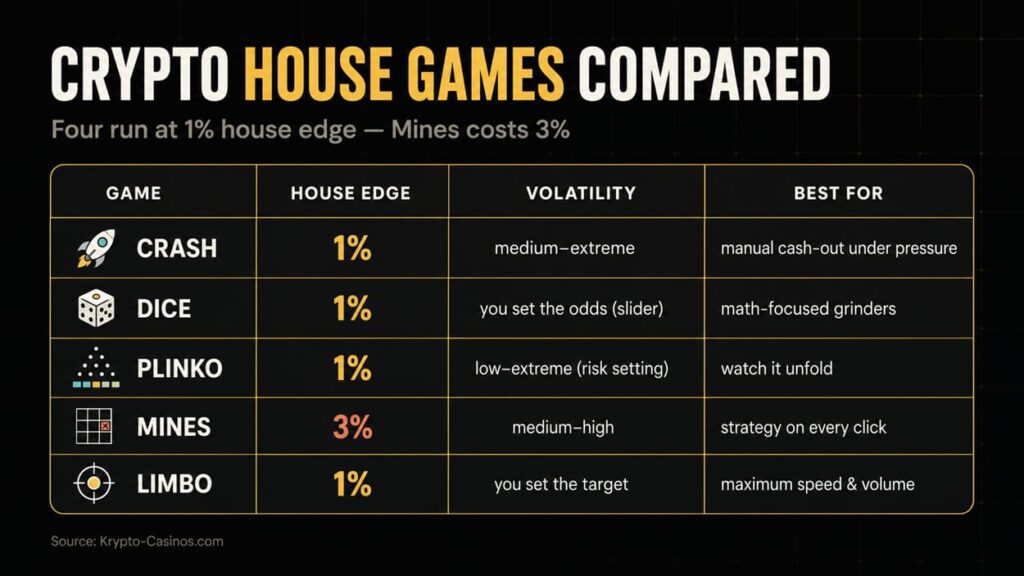
The five core formats are Crash, Dice, Plinko, Mines, and Limbo. Four operate at 99% RTP with a 1% house edge, while Mines sits slightly higher at 3% (97% RTP). Every format publishes cryptographic proof for each bet so you can check results without relying on a third party auditor.
Why this page exists: Each game plays differently in speed, volatility, and decision making. This guide compares all five formats side by side so you can pick the right one for your bankroll and style, then jump straight to our ranked lists of the best sites for each game.
What Are Crypto House Games?
House games are casino games designed, built, and operated by the crypto casino itself. The casino writes the code, sets the house edge, and hosts the game on its own servers. There is no third party provider involved.
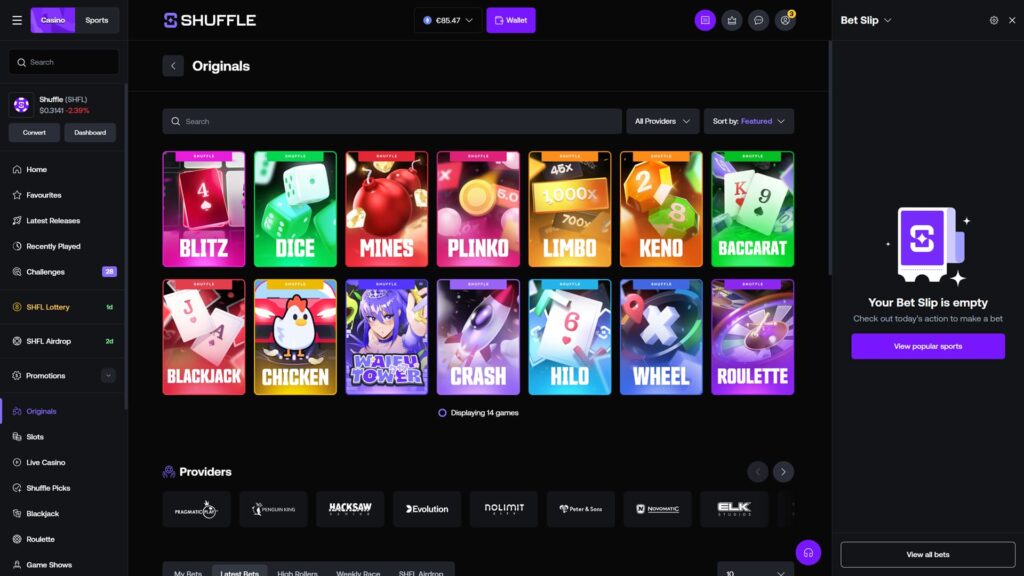
This is the opposite of how slots and live dealer tables work. A slot like Sweet Bonanza comes from Pragmatic Play, gets licensed to dozens of casinos, and runs on Pragmatic’s servers with zero casino control over the math. House games flip that model completely.
What Makes Them Different
The tradeoff is production value. House games have no cinematic animations, bonus rounds, or licensed themes. They are raw math engines built for speed, transparency, and low cost play.
If you want entertainment, play slots. If you want the best odds in the casino, house games are where you start.
Crypto House Games at a Glance
All five house games share provably fair verification and instant round resolution. The differences come down to house edge, how volatile the swings get, and what type of player each format rewards.
| Game | House Edge | Volatility | Best For |
|---|---|---|---|
| Crash | 1% | Medium to Extreme | Adrenaline players who want manual exit control |
| Dice | 1% | Player controlled (slider) | Math focused players who set their own win probability |
| Plinko | 1% | Low to Extreme (risk setting) | Visual players who enjoy watching outcomes unfold |
| Mines | 3% | Medium to High | Strategic players who make decisions during the round |
| Limbo | 1% | Player controlled (target multiplier) | Volume grinders and bonus clearers who want maximum speed |
House edge reflects standard configurations. Some platforms offer 0% house edge originals with daily wagering caps.
Crash
Crash is the only house game where you make your decision after the round starts. You can decide when to cash out while a multiplier increases in real time.
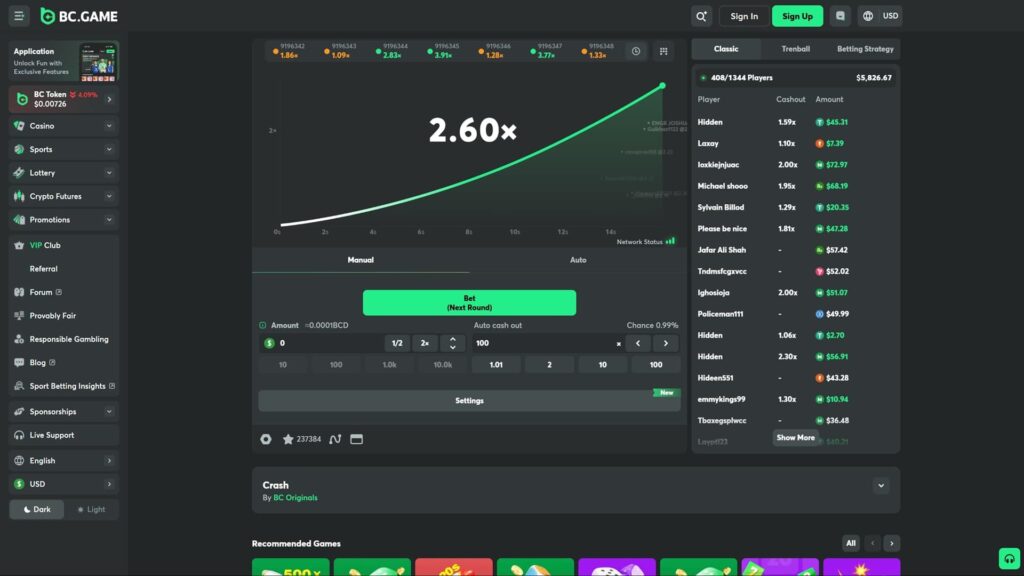
What sets Crash apart from all the other formats on this page is that manual escape under pressure.
How the hash chain and multiplayer verification system work behind each round is covered in our Crash guide.
Most platforms show a live feed of other players cashing out or busting in real time, which makes Crash the most social original game in crypto casinos. You have complete control over volatility; ride toward 100x for high risk, high reward sessions or aim for 1.5x for a low variance grind.
Our Crash casino rankings compare platforms by auto cashout options, provably fair verification, and minimum bet sizes.
Dice
Before Crash existed, there was Dice. It is the original crypto casino game and still the most mathematically transparent. You set a target number between 0 and 100 using a slider, choose whether to roll over or under, and the game generates a single random number.
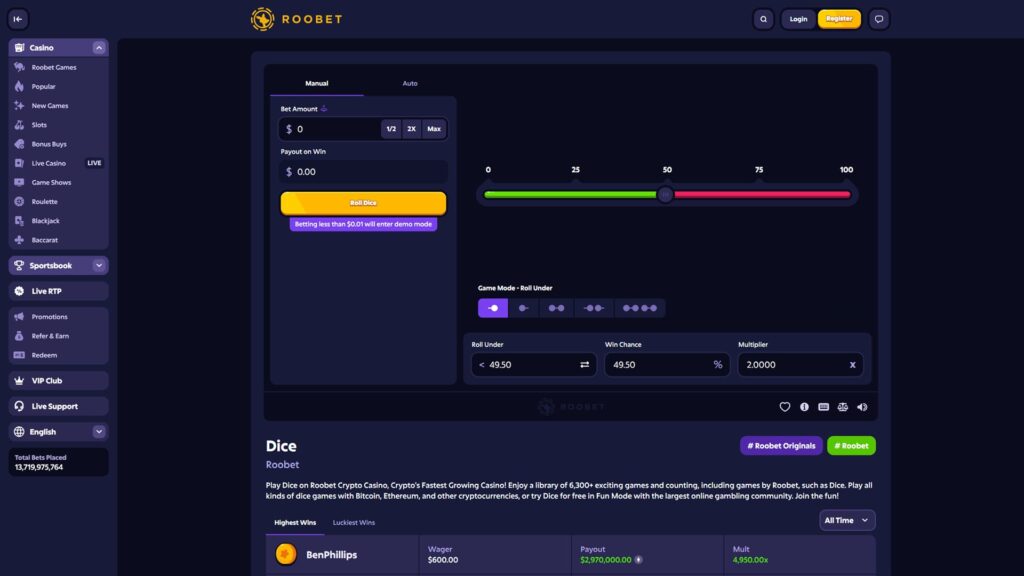
What makes Dice unique is total control over your own odds. Slide the target to 50 and you get a 49.5% win chance at roughly 2x payout. Slide it to 95 and you win almost every round but at 1.05x.
No other house game lets you fine tune win probability to this degree before every single roll. How the seed system converts hashes into roll numbers is in our Dice guide.
Dice is the default for rakeback grinders running thousands of rolls per session. Our Dice casino rankings compare platforms by hotkey support, auto bet options, and VIP programs.
Plinko
Drop the ball and watch. Plinko removes every mid round decision and replaces it with pure physics simulation. You pick a risk level (Low, Medium, or High), choose the number of rows (typically 8 to 16), and drop the ball.
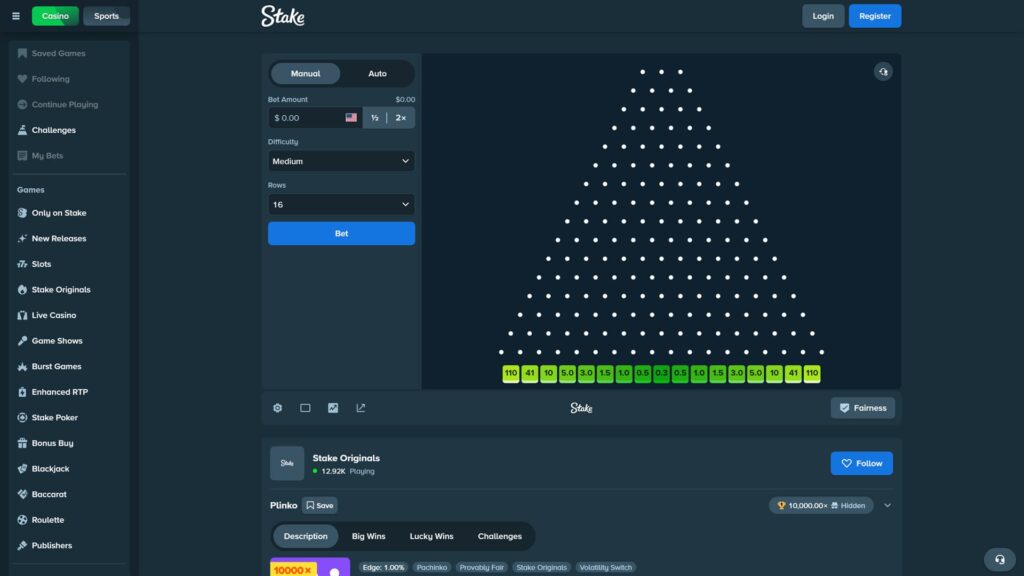
Every peg bounce is a 50/50 left or right decision determined by the provably fair hash, and the final landing bucket sets your payout. How row count and risk level reshape the payout distribution is in our Plinko guide.
How Risk Level Changes Plinko
Low Risk (8 rows): Win 40% to 60% of drops. Max payout around 5.6x. Your bankroll lasts for hours.
High Risk (16 rows): Max multiplier jumps to 1,000x, but you lose the vast majority of drops. Same 1% house edge in both cases. The math just distributes your returns differently.
If you want volatility control without touching a slider or timing a cash out, Plinko is the cleanest option. You configure once, drop, and watch.
Our Plinko casino rankings compare platforms by available row counts, risk level options, and provably fair implementation.
Mines
Every other house game on this list locks your decisions before or during a single moment. Mines gives you a new decision on every click.
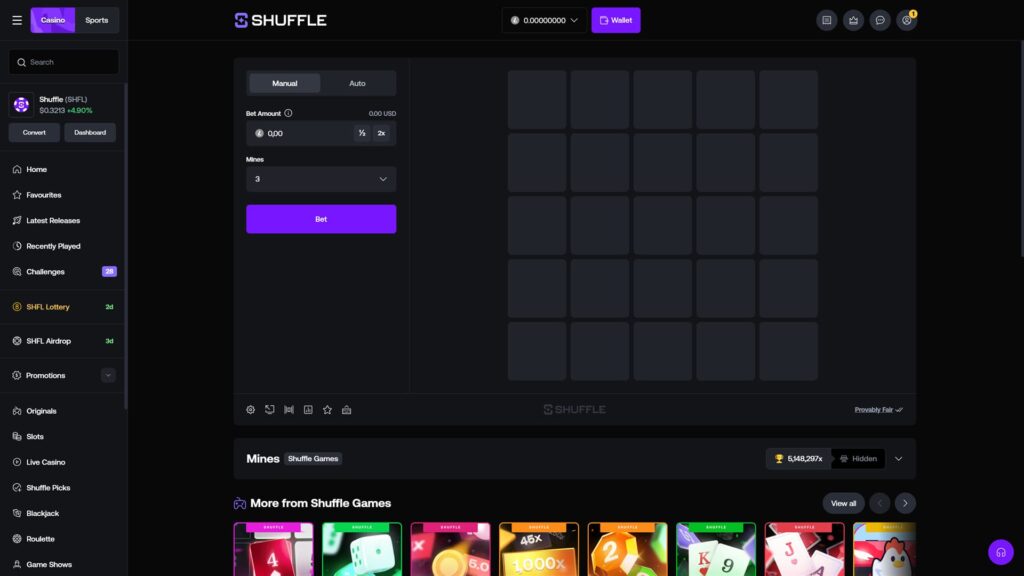
You choose how many mines to place on a 5×5 grid (1 to 24), then click tiles one at a time. Each safe tile increases your multiplier, but hitting a mine loses your entire bet. You can cash out after any successful reveal, and no other format gives you this kind of control once the round is live.
In Crash you decide when to exit, but the outcome is already locked. In Mines, every tile you click is a new risk calculation with more mines meaning higher multipliers but a steeper chance of busting. The full probability math is in our Mines guide.
Note on house edge: Mines carries a 3% house edge (97% RTP), making it the most expensive house game on this page. You pay for that strategic depth with a higher house edge.
Mines costs more than every other game on this page, but nothing else lets you play the board one tile at a time. Our Mines casino rankings compare platforms by mine count options, provably fair verification, and payout speed.
Limbo
Nothing in a crypto casino resolves faster than Limbo. You set a target multiplier before each round, place your bet, and the game instantly generates a random result. If the result meets or exceeds your target you win, and if it falls short you lose.
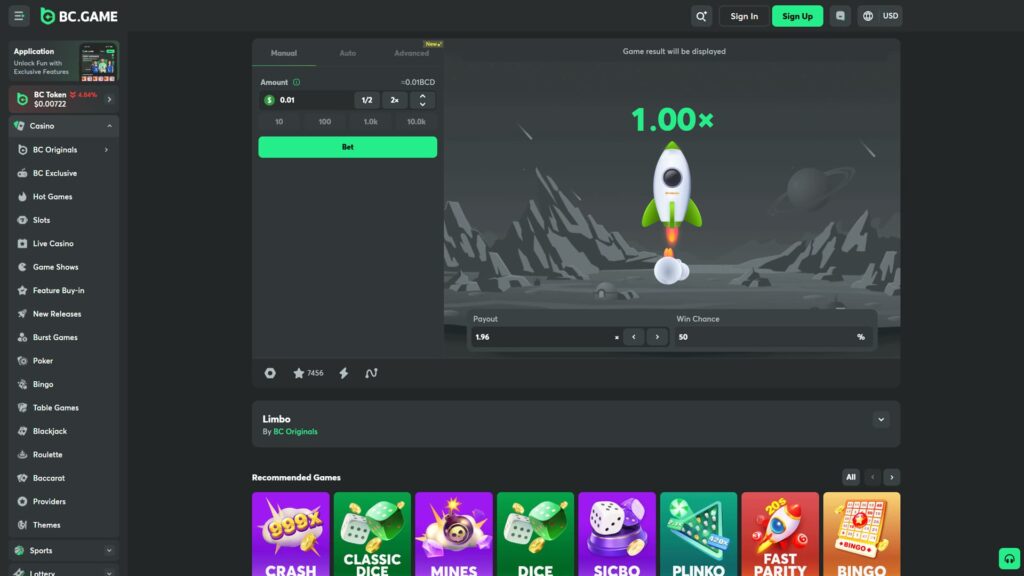
Zero animations, zero wait, you click and the result appears. How the multiplier formula converts hash outputs into results is in our Limbo guide, and verification is almost instant because it is a single calculation.
| Limbo Stat | Value |
|---|---|
| House Edge | 1% |
| Rounds Per Minute (Auto Play) | 100+ |
| Wagering Volume at $10/bet | $60,000 per hour |
| Target Range | 1.01x to 1,000,000x |
Speed is the entire point of Limbo. It is the default choice for players clearing bonus wagering requirements or grinding VIP rakeback tiers as fast as possible.
Low targets win frequently at small payouts, while high targets rarely hit but deliver massive returns. If raw speed and volume matter more than visual feedback or strategic decisions, our Limbo casino rankings compare platforms by auto play speed, uncapped multipliers, and VIP programs.
How to Pick the Right House Game for Your Play Style
All five games share provably fair verification and low house edges, so the right choice comes down to how you want to play. Three factors matter most: how much volatility your bankroll can handle, whether you want decisions during the round, and how fast you want each session to move.
By Bankroll Size
| Bankroll | Best Games | Why |
|---|---|---|
| Under $200 | Dice at 2x, Plinko Low Risk | Tight variance, bankroll lasts longer |
| $200 to $1,000 | Plinko Medium Risk, Crash 5x to 10x | Meaningful swings without fast depletion |
| $1,000+ | All formats viable | Bankroll absorbs losing streaks at any volatility |
By Player Profile
Why House Games Beat Traditional Casino Games on Value
The math is not close. House games return 97% to 99% of every dollar wagered, while traditional slots sit between 92% and 96%. Over thousands of bets, that gap compounds into hundreds or thousands of dollars in difference.
| Game Type | Typical House Edge | Expected Loss per $10,000 Wagered |
|---|---|---|
| Dice / Limbo / Crash / Plinko | 1% | $100 |
| Mines | 3% | $300 |
| Quality Slots (96% RTP) | 4% | $400 |
| Low End Slots (92% RTP) | 8% | $800 |
| European Roulette | 2.7% | $270 |
Expected loss assumes standard RTP values over a large sample of bets.
A player wagering $10,000 on Dice loses $100 in expected value. The same volume on a low end slot costs $800. That is an 8x difference from the same total wagering amount.
Three major crypto casinos have pushed this even further. Duel, Gamdom, and MetaWin now offer permanent 0% house edge originals with daily wagering caps, returning 100% of every dollar wagered below the cap. Above the cap, standard house edge applies.
If you play at any of the crypto casinos we review, check whether their originals run at standard or reduced house edge before you start.
Frequently Asked Questions
Not at provably fair casinos. Every round generates a cryptographic hash from server seed, client seed, and nonce, and after the round the casino reveals the seed so you can verify the result. If the hash does not match, rigging is mathematically provable.
Crash, Dice, Plinko, and Limbo all run at 1% house edge (99% RTP) at standard configurations, while Mines sits at 3% (97% RTP). Some platforms like Duel, Gamdom, and MetaWin offer 0% house edge originals with daily wagering caps.
At most crypto casinos, yes. Provably fair originals typically receive 100% wagering contribution, meaning every dollar bet counts fully toward clearing your bonus. Combined with their low house edge, house games are the most efficient way to complete wagering requirements while losing the least money.
Slots are built by third party providers, run on external servers, and use RNG certified by auditors, while house games are built by the casino itself with provably fair verification you can check. House games carry 1% to 3% house edge versus 4% to 8% on most slots, but lack the visual production value and bonus features that slots offer.
Yes. Every major crypto casino runs house games in the mobile browser with full functionality, and the simple interfaces actually perform better on mobile than slots because they require less processing power. Auto play and hotkey features may vary by platform.
Marcus Velder is a blockchain analyst and provably fair specialist covering the crypto gambling space since 2021. With a background in smart contract auditing and a Master's degree in Computer Science from TU Delft, Marcus brings a technical lens to every casino and game he reviews. He has personally verified hundreds of provably fair bet outcomes and dissected the cryptographic mechanisms behind every major original game format. Based in Lisbon, Portugal.