

Crypto Casino Guides: Learn Before You Play
Every crypto casino guide you need in one place: It includes instructions for setting up a wallet, how to verify that the games are fair, the game's math, how to calculate bonuses, and safety checks.

Here you will find: Free, independently written guides on setting up wallets, provably fair verification, RTP and house edge math, bonus calculations, deposits and withdrawals, and basic safety. No fluff, no sales pressure. Just the information you need to make informed decisions.

Crypto casinos move fast, with new platforms launching and bonus structures changing constantly. The difference between a 1% house edge and a 5% house edge adds up to hundreds of dollars over a single weekend of play.
This is the Krypto Casinos learning hub. Each of the guides below is designed to answer a specific question, give you the exact numbers, and help you play with more confidence.
If you are new to crypto gambling, start from the top. If you already know what you need, jump to any category below.
Getting Started with Crypto Casinos
Are you new to crypto gambling? These four guides will teach you the basics in order: what crypto casinos actually are, how to pick one, how to set up a wallet, and how to move money in and out.

-
We’ll explain how crypto casinos are different from traditional platforms, what “crypto native” means, and why players are switching.
-
Here are some things to think about before you deposit: licensing, game selection, withdrawal limits, supported coins, and red flags to watch for.
-
Custodial vs non-custodial wallets, recommended options for gambling, and the full setup process from download to first deposit.
-
Step by step deposit and withdrawal process, network selection, transaction fees, confirmation times, and common mistakes that cause lost funds.
Do you already have a wallet and know the basics? To learn how crypto casino results are verified and what the math behind every bet looks like, skip ahead to Understanding Game Fairness and Odds.
Game Fairness and Odds
These guides explain the two things that determine whether you are getting a fair deal: the technology that proves the results are not rigged and the math that shows you exactly how much the casino keeps.

Provably Fair Technology
Provably fair is the single biggest advantage crypto casinos have over traditional platforms. It uses cryptographic hashing (SHA-256, HMAC) to let you verify every bet result independently. These three guides cover the concept, the comparison to traditional RNG, and the hands-on verification process.
This explains how server seeds, client seeds, and nonces work together to produce verifiable outcomes. Here is a simple explanation of the full cryptographic process.
A side-by-side look at how the two fairness systems compare. When fair wins, and when traditional RNG is still okay, and what each one means for your trust in the outcome.
The step-by-step verification process: where to find your seeds, how to run the hash check, and what to do if the result does not match.
Game Math Essentials
RTP, house edge, volatility, and RNG are the main ideas that determine your expected results at any casino. Knowing this information will help you understand how much you can expect to lose for every dollar you bet, how much your winnings will change from one game to another, and which games will give you the best value for your money.
This is the percentage of the money bet that the game returns over time. Crypto originals usually have a return-to-player percentage (RTP) of 97% to 99%, while traditional slots often have an RTP of less than 95%.
The casino makes money from every bet. This text will explain how a 1% house edge compares to a 5% house edge. It will also explain what that costs you over 1,000 bets and why lower is always better.
Two games with the same 99% RTP can feel completely different. Volatility affects how often you win, how much you win, and how long you can keep playing before you run out of money.
This guide explains how traditional casinos determine game outcomes, what third-party RNG audits actually test, and how the system compares to provably fair systems.
Here is a list of the best returning games in crypto casinos, ranked from best to worst. The RTP percentages are specific to the following games: Dice (99%), Blackjack (99.29%), Crash (99%), Plinko (99%), and more.

How Crypto Casino Games Work
Before you play any original crypto casino game, understand how it works. Each of these guides will explain how the game works, what causes the outcome to be what it is, and what settings control your risk level.

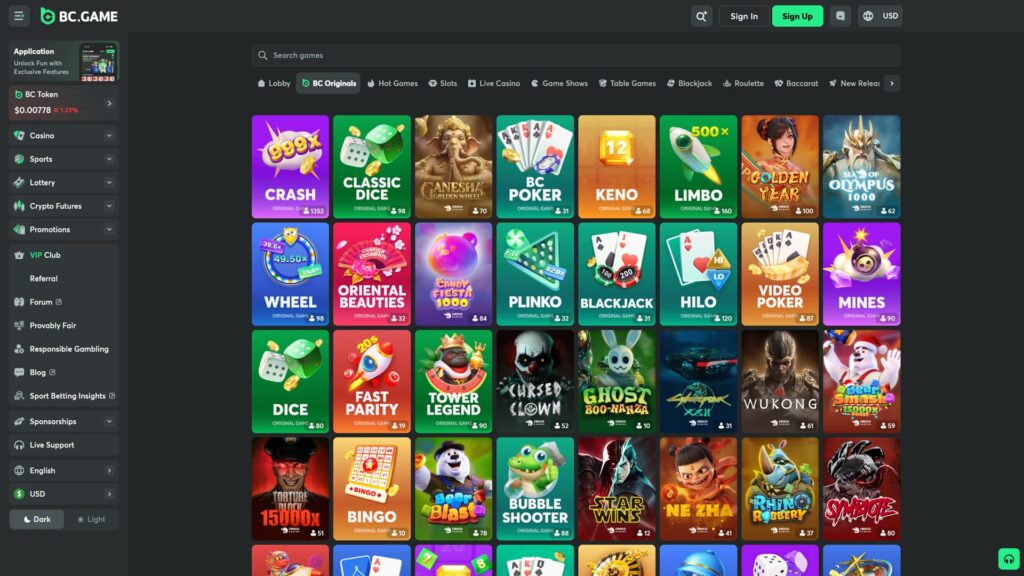
A multiplier starts at 1x and increases until it stops at a random point. Cash out before the crash and you win. We will also look at how the multiplier is generated and what the typical house edge is, which is 1%.
A ball drops through a pyramid of pegs and lands in a multiplier slot. How do row count and risk settings affect your volatility while keeping the same 99% RTP?
Set a target number and then roll over or under it. It’s the simplest game that’s fair, and you have full control over how likely you are to win and how much you could win.
Click tiles on a 5×5 grid to reveal safe spaces while avoiding hidden mines. Each safe tile increases your multiplier. Mine count controls your risk level, from low (1 mine) to extreme (24 mines).
Set a target multiplier and the game will generate a random result. If the result is what you wanted, you win. This is a simple version of Crash that shows immediate results.
Bonuses and Promotions
A 200% welcome bonus is useless if you can’t withdraw your winnings. These guides will teach you how to understand the fine print and figure out if it’s worth claiming a bonus.
How to calculate 35x wagering in dollars, how game contributions affect your clearance speed, and the difference between “bonus only” and “bonus + deposit” wagering.
Convert any bonus into its actual dollar value after wagering. Includes examples at different deposit levels, RTP assumptions, and a quick reference table.
Safety, Privacy, and Access
Crypto casinos aren’t regulated the same way traditional platforms are. Our guides will answer any practical questions you might have about access restrictions, VPN policies, and what to look for when trusting a platform with your money.

We’ll explain which casinos allow VPN usage, which don’t, what happens to your funds if you get caught, and the legal stuff players need to know.
Guides on crypto casino licensing (Curaçao vs Anjouan vs MGA) and scam identification are in progress. In the meantime, our responsible gambling resource page covers self exclusion tools, deposit limit strategies, and support contacts.
Explore More
Are you looking for something in particular? These hubs are about the business side of crypto gambling. They include platform reviews, coin comparisons, and game mechanics.
Tested and ranked platforms by payout speed, supported coins, bonus quality, licensing, and KYC policy.
Best casinos for Crash, Dice, Plinko, Mines, and Limbo. Ranked by house edge, game variations, and provably fair implementation.
About This Knowledge Hub
All the guides in the Krypto-Casinos.com education section are written and maintained by Tomas Lindgren, our Education and Responsible Gambling Editor. Tomas studied journalism at Stockholm University and earned a certificate in digital media from the University of Malta. Since 2020, he has been reporting on the intersection of crypto payments and online gambling regulation.
Our Blockchain Analyst and Provably Fair Specialist, Marcus Velder, reviews technical guides about fair game mechanics, RTP analysis, and house edge calculations. He has independently verified hundreds of bet outcomes across every major crypto casino.
All guides are checked for accuracy and updated every three months. Casinos don’t have any say in the content of the guides.
Tomas Lindgren is the Education and Responsible Gambling Editor at KryptoCasinos. With a journalism degree from Stockholm University and a postgraduate certificate in Digital Media from the University of Malta, Tomas spent three years covering cryptocurrency adoption across the Nordics before relocating to Malta in 2018. He specializes in breaking down complex crypto gambling concepts into step by step guides that anyone can follow. Based in Malta.